

This article provides general information only and is not legal advice. Divorce requirements and outcomes depend on the facts of each case.
Filing for divorce in Alexandria means dealing with Virginia-specific rules, strict separation requirements, and court filings at the Alexandria Circuit Court on King Street. Mistakes can cause delays, added costs, or avoidable legal complications. The Alvarez Law Firm guides Alexandria residents through exactly what the process requires before they make a single move, so you can protect your assets, your children, and your future while we handle the legal work.
Our attorneys practice family law throughout Northern Virginia and serve clients in both English and Spanish from our office at 50 S Pickett St STE 110, Alexandria, VA 22304. Talk to our attorneys before you file or commit to any agreement.
Key Takeaways
- Virginia requires a separation period before filing for divorce, and the length depends on whether you have minor children.
- Divorce cases properly venued in the City of Alexandria are handled by the Alexandria Circuit Court at 520 King Street.
- Federal employees and military families face additional steps when retirement accounts or pensions are part of the marital estate.
- Missing a procedural deadline or filing the wrong form can delay your divorce by months or cost you key rights.
- An attorney review before you file can help identify procedural and legal issues under Virginia law.
1. What Is Virginia’s Residency Requirement for Divorce?
Under Virginia Code § 20-97, at least one spouse must have been domiciled in Virginia for a minimum of six months immediately before filing. This is not a soft guideline. File before that six-month mark and the court will dismiss your case outright.
“Domiciled” is not the same as physically present. Domicile means Virginia is your permanent home state, the place you intend to stay. Maintaining a legal home address in another state may affect the domicile analysis, but residence, intent, military status, and the full circumstances should be reviewed before filing.
Virginia law includes specific domicile and residency provisions for members of the Armed Forces. A qualifying service member who has been stationed or resided in Virginia and lived in the Commonwealth for at least six months before filing may be presumed domiciled in Virginia under § 20-97. Because domicile is fact-specific, speak with an attorney before deciding who should file.
If you are close to the six-month mark, wait. Document your residency in the meantime. Lease agreements, utility bills in your name, and Virginia voter registration all help establish domicile. Do not guess at whether you qualify. Talk to a family law attorney in Alexandria before you file anything.
2. Why Does Virginia Require a Separation Period, Not Just a Decision to Divorce?
Deciding to end your marriage is not enough to start the legal clock. Under Virginia Code § 20-91(9), you must live separately and apart from your spouse for a full year before you can file for a no-fault divorce. That clock starts on the date of physical separation, not the date you file paperwork.
There is one exception. If you have no minor children and both spouses have signed a written separation agreement, that waiting period drops to six months. If you want to understand how this affects your overall timeline, see how long a divorce takes in Virginia before you make any plans.
What “Living Separately and Apart” Actually Means
Whether a separation meets Virginia’s legal requirements depends on the facts of the relationship and should be evaluated with an attorney.
The Same-Roof Separation Risk
Living under the same roof during a separation can raise fact-specific legal questions. Speak with an attorney about your circumstances and the documentation that may be relevant. Our Alexandria divorce attorneys can help you build that record correctly from day one.
Protect your separation record. A same-roof separation done wrong can cost you the filing date you need.
3. What Does Filing at the Alexandria Circuit Court Actually Involve?
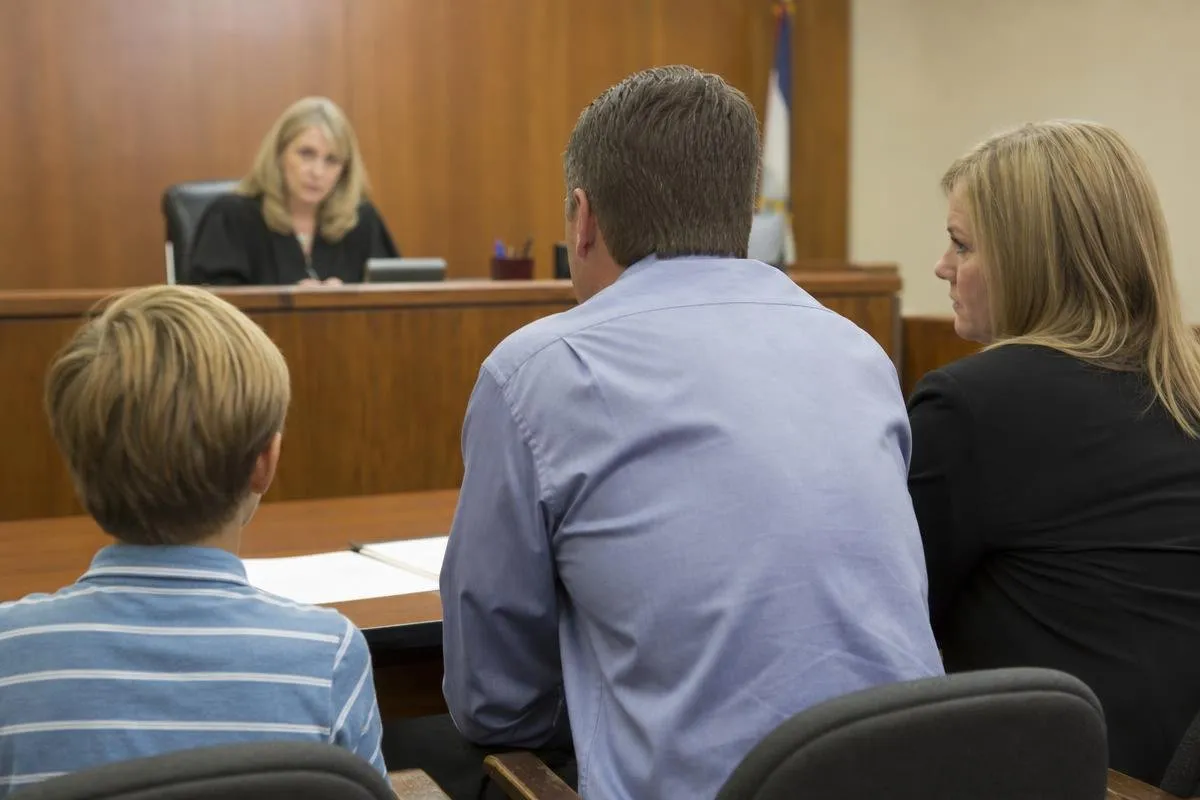
If your divorce case is properly filed in Alexandria, it is handled by the Alexandria Circuit Court at 520 King Street, Alexandria, VA 22314. Divorce venue depends on the facts of the case, including where the parties last lived together and where the parties reside. Speak with an attorney before choosing where to file.
You will need four core documents to start your case under Virginia law:
- Complaint for Divorce
- Civil Case Cover Sheet
- Summons
- VS-4 form (Virginia vital statistics form)
Court filing fees can change, so confirm the current amount with the clerk’s office before you file. If your spouse must be served by the sheriff’s office, an additional service fee applies. After the clerk processes your filing, a summons is issued. Your spouse must then be formally served, either by the sheriff or a private process server.
Court filing procedures, forms, fees, and clerk hours can change. Confirm the current requirements directly with the court or speak with an attorney before filing.
If you want to understand how the process unfolds after filing, read our breakdown of uncontested divorce in Virginia and how it compares to contested.
4. Are You Filing an Uncontested or Contested Divorce?
What Makes a Divorce Uncontested in Virginia
Uncontested means both spouses agree on every issue before filing. Every issue. Property division, spousal support, child custody, child support, all of it. One unresolved dispute moves you into contested territory.
Under Virginia Code § 20-109.1, a signed separation agreement covering all those issues can be incorporated directly into your final divorce decree. That can make the process faster and less expensive than litigating disputed issues. Read more about uncontested divorce in Virginia and how it compares to contested before you assume which category you fall into.
Do not mistake “we’re on good terms” for “we’re uncontested.” Couples can start out agreeable and later encounter disputes over a retirement account or shared home. Good intentions do not substitute for a written, signed agreement.
When a Divorce Becomes Contested, and What That Costs You
A contested divorce requires formal litigation. That means discovery, motions, hearings, and often a full trial. Contested-divorce timelines and costs vary based on the issues, court schedule, discovery, and whether the parties reach a settlement.
Federal employee and military divorces can involve additional complexity when Thrift Savings Plan (TSP) accounts, FERS pensions, or security-clearance concerns are involved. Retirement assets require careful analysis before they are divided.
Even contested cases do not always go to trial. Many couples reach a settlement through mediation. Understanding the difference between divorce mediation vs. litigation can help you make a smarter, faster decision about how to proceed.
5. Property Division in Virginia Follows Equitable Distribution, Not a 50/50 Split
Virginia does not automatically split marital property down the middle. Under Virginia Code § 20-107.3, courts divide property based on what is fair, not what is equal. That distinction matters enormously when you are filing for divorce and have significant assets on the table.
Property you think is yours may not be treated that way under Virginia law, and property you think is shared may be protected as separate. Knowing which category your assets fall into before you file can change your outcome significantly.
Courts weigh several factors when deciding how to divide marital property:
- Length of the marriage
- Each spouse’s financial and non-financial contributions
- How and when property was acquired
- Each spouse’s current economic circumstances
This can be especially important when a divorce involves multiple income sources or retirement benefits. Federal employees may hold retirement accounts and pension benefits that qualify as marital property when contributions were made during the marriage. Real estate can also be a significant asset in a local divorce.
Separate property, meaning assets owned before the marriage or received as a gift or inheritance, is generally protected. But commingling separate funds with marital funds can erase that protection. Our Alexandria divorce attorneys can help you identify which assets are at risk before you file. You can also review 9 assets Alexandria couples should protect with a prenuptial agreement for additional context on how courts treat these distinctions.
6. Child Custody and Support Are Decided Separately from the Divorce Itself

Your divorce decree ends the marriage. It does not automatically decide who gets custody of your children or how much support gets paid. Custody and child support are separate legal determinations, even when handled in the same court proceeding. Many parents in the Beverley Hills and Braddock areas are caught off guard by this distinction.
Under Virginia Code § 20-124.3, courts decide custody based on the best interests of the child. Judges look at the child’s age, each parent’s role in daily life, the strength of each parent’s relationship with the child, and each parent’s willingness to support the child’s bond with the other parent. There are two types of custody to resolve: legal custody, which covers decision-making authority over education and healthcare, and physical custody, which determines where the child lives. Both must be addressed before your case closes.
Custody matters are fact-specific, and military families may have additional scheduling considerations. Early legal guidance can help parents prepare for the process. Our child custody lawyer in Alexandria, VA can help you build a plan that holds up under scrutiny. For a deeper look, read what Virginia’s child custody laws mean for parents.
Child support is calculated under Virginia Code § 20-108.2 using the income shares model. The court looks at both parents’ gross incomes and the number of children. A child support attorney Alexandria, VA can help you understand what the numbers actually mean for your situation before you agree to anything.
Custody and support decisions affect your children’s lives for years. Call us at (703) 888-0959 so you can focus on your family while we handle the legal details.
7. Spousal Support Is Not Automatic: Virginia Courts Look at Specific Factors
Earning less than your spouse does not guarantee you will receive spousal support. Under Virginia Code § 20-107.1, you must request it and show the court why you need it. The judge then weighs a specific list of factors before awarding anything.
Those factors include the length of the marriage, each spouse’s earning capacity, the standard of living during the marriage, and each spouse’s contributions, including homemaking and child-rearing. In some long-term marriages, one spouse may have left the workforce to raise children. The court may consider that history when evaluating whether support is appropriate and, if so, its type and duration.
Virginia law can restrict spousal support when adultery is established under § 20-107.1(B), but the court may still award support if denying it would create a manifest injustice based on the parties’ relative fault and economic circumstances. Subsection E lists factors the court considers when determining support.
Support can be temporary while the divorce is pending, rehabilitative for a fixed term, or permanent in rare cases involving very long marriages. The type and duration of support depend on the statutory factors and the facts of the case.
Virginia’s spousal-support rules are fact-specific and consequential. Our family law attorney in Alexandria can assess your situation before you make any decisions.
8. A Separation Agreement Can Protect You, but Only If It Holds Up Under Virginia Law
Before committing to any terms, understand what a separation agreement can and cannot do under Virginia law. A properly drafted property settlement agreement can resolve every marital issue, from property division to spousal support, and be incorporated directly into your final divorce decree under Virginia Code § 20-109.1. That makes it one of the most powerful tools in an uncontested divorce. It can also make a poorly drafted agreement one of the most expensive mistakes you can make.
A Virginia marital agreement is generally required to be in writing and signed by both parties, subject to statutory exceptions. Have an attorney confirm the execution and acknowledgment requirements for your agreement. Courts will not enforce vague or ambiguous language. If your agreement leaves terms open to interpretation, a judge may reject it or one spouse may challenge it successfully later.
Online templates are a particular risk for federal employees. Generic forms routinely miss Virginia-specific rules for dividing retirement accounts. Dividing a private pension requires a Qualified Domestic Relations Order (QDRO). Dividing a federal pension requires a Court Order Acceptable for Processing (COAP). These are separate legal instruments. A template that skips them leaves your retirement benefits unprotected. For more on what assets deserve this kind of attention, see 9 assets Alexandria couples should protect with a prenuptial agreement.
Our attorneys review and draft separation agreements under Virginia law, so you can focus on moving forward while we handle the legal details. If you have questions about your situation, ask us for a separation agreement review before you sign. Contact our family law attorney in Alexandria today.
9. Fault Grounds Still Matter in Virginia, Even for No-Fault Divorces
Many local residents assume that filing no-fault means fault is off the table. It is not. Under Virginia Code § 20-91, courts recognize fault grounds including adultery, cruelty, felony conviction, and willful desertion. Even if you file no-fault, what your spouse did during the marriage can still affect your outcome.
Fault has real financial consequences. Adultery can bar a spouse from receiving spousal support entirely. Courts can also consider dissipation of marital assets when dividing property. If your spouse drained a joint account or wasted shared funds, that conduct is relevant. Talk to one of our Alexandria divorce attorneys before deciding which path to take.
Proving fault is not simple. Virginia Code § 20-99 prohibits you from proving fault solely through your own testimony. You need corroborating evidence, a witness, financial records, or documented communications. If your spouse committed adultery, that fact has real legal consequences, but only if you can prove it with corroborating evidence.
Fault allegations can complicate a divorce. Discuss the facts, potential consequences, and available options with an attorney before choosing a strategy.
10. What Alexandria Families Should Know About Timing, Costs, and Next Steps
Timing depends almost entirely on whether your divorce is contested. An uncontested divorce with a signed separation agreement and no minor children can wrap up in as few as 6 to 8 months from the date of separation. A contested divorce can take substantially longer, depending on the disputed issues, discovery, court schedule, and whether the parties reach a settlement. If you want a realistic picture of where your case falls, read our breakdown of uncontested divorce in Virginia and how it compares to contested.
Court filing fees can change, so verify the current amount with the clerk before filing. Attorney fees vary based on complexity, and cases may involve federal retirement accounts, security-clearance concerns, and local real estate. Those issues may require Virginia-specific legal analysis. After a divorce is finalized, updating your estate plan matters too. Our estate planning attorney in Alexandria, VA can help you protect what comes next.
Our attorneys handle cases in both English and Spanish, which matters in a city with as many bilingual residents as this one. Before you commit to any agreement or move out of the marital home, talk to us first. The decisions you make in the first weeks of a divorce can shape the outcome for years. Our attorneys are here to help you get them right.
Frequently Asked Questions
How much does it cost to file for divorce in Alexandria, VA?
Court filing fees can change, so confirm the current amount with the clerk’s office. That covers the initial complaint only. You will also pay service fees to have your spouse served, and attorney fees vary based on whether your case is uncontested or contested. Call us so you understand the full cost picture for your specific situation.
Do both spouses have to agree to file for divorce in Virginia?
No. One spouse can file without the other’s consent. The filing spouse must still meet the residency requirement and complete the required separation period under Virginia Code § 20-91. If your spouse contests the divorce, the case moves to a contested proceeding. Read our breakdown of divorce mediation vs. litigation to understand what that path looks like.
Can I file for divorce in Alexandria if my spouse lives in another state?
Yes, as long as you have been domiciled in Virginia for at least six months under Virginia Code § 20-97. The court can divide Virginia-based property and address support. Jurisdiction over your out-of-state spouse for personal financial claims may be limited, so get qualified legal guidance early.
What is the difference between a legal separation and divorce in Virginia?
Virginia does not recognize formal legal separation as a distinct legal status. The required separation period for a no-fault divorce serves a similar function. You can sign a separation agreement during that period to resolve property, support, and custody issues before the divorce is finalized.
How does filing for divorce affect a federal security clearance?
Filing itself does not automatically trigger a clearance review. However, financial disputes, debt disclosures, and any misconduct allegations in the divorce record can draw adjudicator attention. Federal employees and defense contractors near the Potomac Yard and Eisenhower Avenue corridors should speak with an attorney before filing.
Does The Alvarez Law Firm handle bilingual divorce cases in Alexandria?
Yes. Our team assists Spanish-speaking clients with divorce, custody, and support matters. Call our Alexandria divorce attorneys or visit our office at 50 S Pickett St STE 110, Alexandria, VA 22304 to schedule a consultation.
Filing for divorce involves Virginia statutes, a specific courthouse, and decisions about property, children, and support that carry consequences for years. Our attorneys are ready to walk you through your situation clearly and honestly. Call The Alvarez Law Firm at (703) 888-0959 or visit us at 50 S Pickett St STE 110, Alexandria, VA 22304. We serve clients in both English and Spanish.
Ready to Get Started with The Alvarez Law Firm?
Call (703) 888-0959 to speak with our team directly. We’re ready to answer your questions, walk you through your options, and help you find the right solution for your needs. Whether you’re just starting to plan or ready to move forward, we’ll help you understand the process and your options. Reach out today and let’s talk about how we can help.