

A pedestrian accident in Alexandria, VA can change the course of your life in seconds. One moment you are walking through Old Town, crossing King Street, or stepping into a crosswalk on Duke Street; the next, you are dealing with paramedics, police officers, hospital paperwork, and an insurance adjuster who is already building a case against you.
The hours, days, and weeks that follow are confusing for almost everyone. Knowing what to expect at each stage helps you protect your health, your legal rights, and your ability to recover the compensation you are owed.
The First Few Hours: What to Do at the Scene
What happens in the first hour after impact often shapes everything that follows. Your priorities, in order, are safety, medical attention, and evidence.
- Get out of the roadway if you can move. Pedestrians are sometimes hit by a second vehicle moments after the first impact. If you can move without making your injuries worse, get to the sidewalk or shoulder.
- Call 911 or have someone call for you. This dispatches both medical care and police. A police report creates an official record of the crash, and Alexandria officers will document the driver’s information, witness statements, and their own observations of the scene.
- Accept medical evaluation on scene. Even if you feel “okay,” adrenaline masks injuries. Internal bleeding, concussions, and spinal injuries can all present with mild or delayed symptoms. Let paramedics evaluate you.
- Get the driver’s information. Full name, address, driver’s license number, license plate, vehicle make and model, and insurance carrier and policy number.
- Photograph everything you can. The vehicle, its position, skid marks, the crosswalk, traffic signals, your visible injuries, road and weather conditions, and any debris.
- Get contact information from witnesses. Independent witnesses are often the difference between a successful claim and a denied one in Virginia.
- Do not discuss fault. Stick to factual answers about where you were, what direction you were walking, and what happened. Apologizing or speculating about fault can be used against you later.
If your injuries are serious, you will not be able to do most of these things yourself. That is normal. A friend, family member, or your attorney can return to the scene later, request police reports, and track down witnesses and surveillance footage from nearby businesses.
Medical Care in the Days That Follow
Hospital discharge is the start of your medical journey, not the end of it. Several injury types common in pedestrian accidents do not produce obvious symptoms until 24 to 72 hours after impact.
- Traumatic brain injuries (TBI): Concussions can occur without any direct blow to the head. The brain striking the inside of the skull during sudden deceleration is enough.
- Internal bleeding and organ injuries: Slow internal bleeds may not produce significant symptoms until hours later.
- Spinal and soft-tissue injuries: Whiplash, herniated discs, and ligament damage often worsen over the following days.
- Fractures and orthopedic injuries: Hairline fractures sometimes go undetected on initial X-rays.
Follow up with your primary care physician or an urgent care clinic within 24 to 48 hours of the accident, even if the emergency room cleared you. Continue to follow every treatment recommendation: physical therapy, specialist referrals, imaging, and prescriptions. Gaps in treatment are one of the most common arguments insurers use to reduce the value of pedestrian accident claims.
Keep a recovery journal. Note your pain levels, symptoms, missed work, sleep problems, and how the injuries affect your daily routine. Save every receipt, every bill, every discharge paper, and every prescription. This documentation becomes the foundation of your damages claim.
How Virginia’s Contributory Negligence Rule Affects Your Case

Most states use comparative negligence, where a pedestrian found 20 percent at fault still recovers 80 percent of their damages. Virginia does not work that way. A 1 percent fault finding produces a zero recovery.
Insurance companies know this rule and use it aggressively. They will look for any foothold to assign you partial blame:
- Stepping off the curb a second too early.
- Crossing outside of a marked crosswalk.
- Looking at a phone while crossing.
- Wearing dark clothing at night.
- Crossing against a “Don’t Walk” signal, even briefly.
This is why the evidence you and your legal team collect matters so much, and why speaking with experienced legal counsel before giving a statement is critical. A good lawyer’s job in a Virginia pedestrian case is not just to prove the driver was at fault, but to disprove any suggestion that you contributed to the crash. Reading the insurance company is not your friend gives a clearer picture of how insurers approach these cases.
What the Insurance Process Looks Like
Insurance adjusters typically contact pedestrians within days of an accident. The conversation sounds friendly. It is not.
The adjuster’s job is to minimize the payout, and Virginia’s contributory negligence rule gives them an aggressive tool to do it. Common tactics include:
- Requesting a recorded statement. You are not required to give one to the at-fault driver’s insurer. Anything you say, including innocent answers, can be parsed for any hint of shared fault.
- Asking broad medical authorizations. A signed release can give the insurer access to years of unrelated medical history, which they will use to argue your injuries pre-existed the accident.
- Quick lowball settlement offers. Early offers often cover initial emergency room bills and little else. Once you sign, you cannot reopen the claim, even if injuries worsen or new conditions emerge.
- Delays designed to wear you down. Mounting bills create pressure to accept whatever is offered.
The right move in most cases is to refer all insurer communication to your Alexandria pedestrian accident lawyer before responding. Your attorney can negotiate with the insurer, build a documented demand package, and file a lawsuit if a fair settlement cannot be reached.
Pedestrian Right-of-Way Under Virginia Law
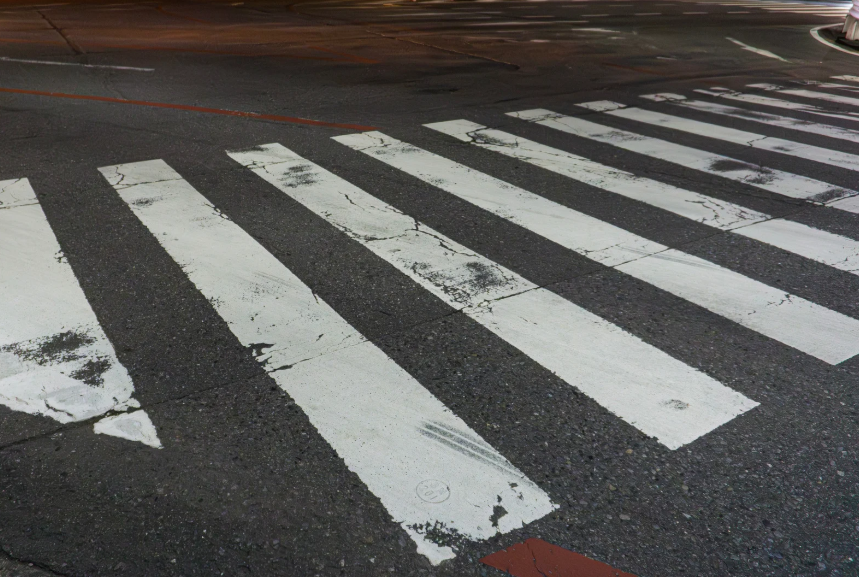
Two sections of the Virginia Code define the rules of the road for pedestrians and the drivers who share it with them.
Under Virginia Code § 46.2-924, drivers must stop for pedestrians who are crossing within a marked crosswalk, at any regular pedestrian crossing, or at any intersection where the speed limit is 35 mph or less. The driver must remain stopped until the pedestrian has cleared the driver’s lane.
Virginia Code § 46.2-925 governs pedestrian behavior. Pedestrians must obey traffic signals, use crosswalks where they exist, and avoid stepping into traffic in a way that gives drivers no reasonable opportunity to stop.
When a driver violates § 46.2-924 at a marked crosswalk, the pedestrian almost always has a strong claim. When the pedestrian violates § 46.2-925 by jaywalking or crossing against a signal, contributory negligence becomes a serious obstacle, even if the driver was speeding or distracted. Most real cases fall somewhere between those poles, which is why a careful investigation matters so much.
What Compensation Pedestrians Can Pursue
A successful pedestrian accident claim in Virginia compensates injured pedestrians for two broad categories of losses.
| Type of Damages | What It Covers |
|---|---|
| Economic damages | Emergency room bills, hospital stays, surgery, prescription medication, physical therapy, future medical care, lost wages, lost earning capacity, and damaged personal property such as glasses, phones, and clothing. |
| Non-economic damages | Pain and suffering, emotional distress, mental anguish, loss of enjoyment of life, scarring and disfigurement, and the impact of permanent disability on daily living. |
Catastrophic cases involving permanent disability, traumatic brain injury, or wrongful death can also involve future-care projections, vocational expert testimony, and life-care planning. The full value of a pedestrian accident claim is rarely apparent in the first weeks after the crash, which is another reason early settlement offers are usually inadequate.
Alexandria-Specific Risk Factors
Alexandria’s walkability is part of what makes the city attractive, and also part of what makes pedestrian accidents so common. Several corridors have been flagged repeatedly in city safety studies and Vision Zero reports.
- King Street through Old Town, particularly between Patrick Street and Henry Street, has seen repeated pedestrian crashes over the years.
- Richmond Highway (Route 1) in the Hybla Valley and Mount Vernon areas is consistently identified as a high-risk corridor.
- Duke Street carries heavy commuter traffic and recorded 30 injury crashes between January 2021 and July 2024.
- Seminary Road and Beauregard Street features confusing turn lanes that contribute to crashes during peak hours.
- Braddock Road and North West Street, located near a Metro station, mixes commuters, pedestrians, and cyclists in a stop-and-go environment.
Alexandria adopted its Vision Zero policy in 2017 with the goal of eliminating traffic deaths and serious injuries by 2028. Between 2017 and 2021, more than 150 people were killed or severely injured in traffic crashes in the city. The infrastructure improvements and “no turn on red” restrictions rolled out along Patrick and Henry Streets are part of that response, but pedestrian crashes remain a frequent reality.
Deadlines That Can End Your Claim
Virginia gives injured pedestrians two years from the date of the accident to file a personal injury lawsuit. If a loved one died in the crash, families have two years from the date of death to file a wrongful death claim.
Two years sounds like a long window, but it disappears quickly. Witnesses move away. Surveillance footage is overwritten or deleted. Memories fade. Medical records pile up. The earlier evidence is preserved and the earlier counsel begins building the case, the stronger the eventual claim. Missing the deadline almost always means the case is gone, regardless of how strong the underlying facts are.
Talk to an Alexandria Pedestrian Accident Lawyer Today!
If you or a family member was hit by a vehicle while walking in Alexandria, the choices you make in the first weeks shape the entire claim. The Alvarez Law Firm can review the police report, preserve evidence, handle the insurance company, and pursue the compensation you are owed. Call (703) 888-0959 or contact us online to schedule a consultation.
Frequently Asked Questions
Should I talk to the driver’s insurance company after a pedestrian accident in Alexandria?
You are not required to give a recorded statement to the at-fault driver’s insurer, and in most cases you should not. Anything you say can be used to argue you share fault, which under Virginia’s contributory negligence rule could end your claim entirely. Refer the adjuster to your attorney.
What if the driver who hit me drove away?
Hit-and-run pedestrian accidents are serious but not hopeless. Surveillance footage from nearby businesses, traffic cameras, witness descriptions, and physical evidence at the scene often help identify the driver. If the driver is never identified, your own auto insurance policy may include uninsured motorist coverage that applies to pedestrian injuries.
What if I do not have health insurance?
Lack of health insurance does not bar a pedestrian accident claim. The at-fault driver’s liability coverage is responsible for medical bills caused by their negligence. Some Virginia attorneys also work with medical providers who treat injured pedestrians on a lien basis, meaning the bill is paid out of the eventual settlement.
Can I still recover compensation if I was jaywalking?
Possibly, but it is significantly more difficult. Crossing outside a marked crosswalk gives the insurer a contributory negligence argument. Each case turns on specific facts: the speed limit, the driver’s behavior, sight lines, lighting, and witness accounts. An experienced personal injury attorney can evaluate whether the driver’s negligence was the sole cause despite the jaywalking.
How long does a pedestrian accident claim take in Virginia?
Simple claims with clear liability and modest injuries can resolve in a few months. Cases involving disputed fault, severe injuries, or contested damages often take 12 to 24 months, particularly if a lawsuit is filed.
How much does it cost to hire a pedestrian accident lawyer?
Most pedestrian accident attorneys, including The Alvarez Law Firm, work on a contingency-fee basis. You pay no attorney’s fees unless your case results in a recovery, and the fee is a percentage of that recovery. Initial consultations are typically free.
If you were injured in a pedestrian accident in Alexandria, contact The Alvarez Law Firm today at (703) 888-0959 for a free consultation.
About The Alvarez Law Firm
The Alvarez Law Firm represents pedestrians, drivers, cyclists, and other injured Virginians across Alexandria and the broader Northern Virginia region. With a focus on personal injury cases that include serious pedestrian injury claims, our team handles every step of the process so clients can focus on recovery.