
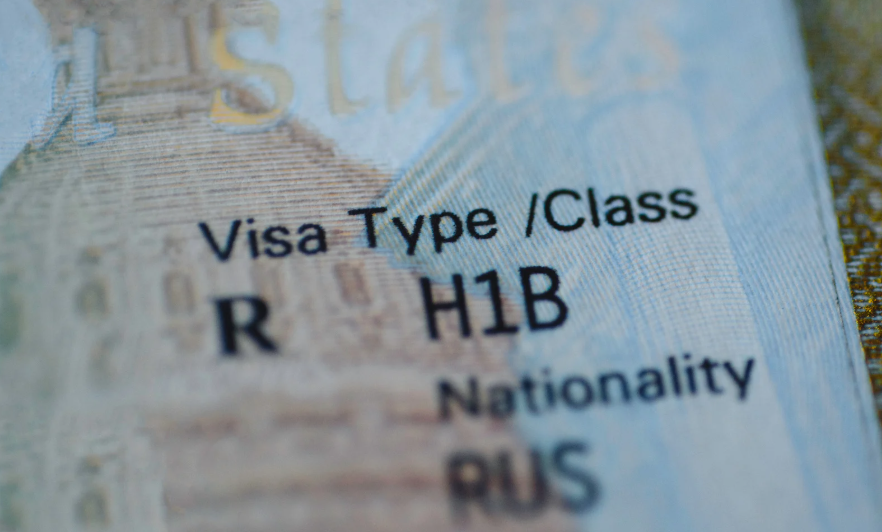
For most H-1B visa holders, the long-term goal is not another renewal. It is permanent residence, the green card that ends the cycle of three-year extensions, employer dependence, and uncertainty over what happens at year six. Going from H-1B to green card is a well-traveled path, but it is also complex, often spanning two to ten years and involving three federal agencies, multiple forms, and rules that change depending on country of birth and employment category.
This guide explains how H-1B holders move from temporary worker status to lawful permanent residence, what each stage of the process involves, and the strategic decisions that make the difference between a smooth transition and a stalled case.
Why H-1B Holders Are Uniquely Positioned to Pursue a Green Card
The H-1B visa is one of the few U.S. work visas that recognizes “dual intent.” Most other work visas (TN, J-1, F-1, B-1) require the holder to maintain nonimmigrant intent, meaning they must intend to return home when their visa ends. Pursuing a green card while on one of those visas can be grounds for visa denial, extension denial, or removal.
H-1B holders face no such limitation. Under 8 CFR § 214.2(h)(16)(ii), an H-1B beneficiary can simultaneously hold H-1B status and pursue lawful permanent residence without any contradiction. That dual intent doctrine is what makes the H-1B the preferred long-term immigration pathway for most foreign professionals working in the United States.
Timing matters enormously. H-1B status is generally capped at six years (initial three-year period plus one three-year extension). Without a green card process underway, an H-1B holder approaching that six-year cap must leave the United States for at least one year before being eligible for another six years of H-1B. Starting the green card process early, ideally in the first or second year of H-1B status, preserves the ability to extend H-1B status indefinitely while waiting for the green card.
The Three Main Employment-Based Categories for H-1B Holders
Most H-1B holders pursue one of three employment-based green card categories. The category determines whether PERM labor certification is required, what the typical timeline looks like, and how much the country-of-birth backlog will affect the case.
| Category | What It Covers | PERM Required | Self-Petition? | Typical Backlog |
|---|---|---|---|---|
| EB-1 | Extraordinary ability, outstanding researchers/professors, multinational executives | No | EB-1A only | Generally current; longer for India and China |
| EB-2 | Advanced degrees (master’s+), exceptional ability, National Interest Waiver | Yes (NIW exempt) | NIW only | Significant for India and China; manageable for others |
| EB-3 | Bachelor’s degrees, skilled workers (2+ years training), other workers | Yes | No | Significant for India and China; longer than EB-2 in some periods |
Most H-1B holders end up in EB-2 or EB-3, both of which require employer sponsorship and labor certification. The most common path is EB-2 PERM through the current employer, although the EB-2 National Interest Waiver and EB-1A categories have grown more popular for highly accomplished applicants because they bypass PERM and allow self-petitioning.
Stage 1: PERM Labor Certification
For EB-2 PERM and EB-3 cases, the process starts with the employer obtaining a Permanent Labor Certification, commonly called PERM, from the U.S. Department of Labor. The PERM process is designed to demonstrate that no qualified U.S. worker is available for the position the H-1B holder fills.
The PERM process involves several steps:
- Prevailing wage determination. The employer requests a prevailing wage from the DOL National Prevailing Wage Center based on the position’s duties, location, and required qualifications. Processing can take three to six months.
- Recruitment. The employer must conduct a structured recruitment campaign that typically includes two Sunday newspaper advertisements, a 30-day State Workforce Agency job order, and three additional recruitment steps for professional positions. The recruitment must occur within specific time windows relative to the PERM filing.
- PERM filing. The employer files Form ETA-9089 with the DOL, attesting to the recruitment results and the absence of qualified U.S. applicants.
- DOL adjudication. Processing times have grown significantly in recent years, with current PERM processing routinely exceeding a year. Audits add additional months.
PERM is the part of the process where H-1B holders depend most heavily on their employer. The employee cannot file PERM independently, cannot pay PERM legal fees under federal regulation, and is largely a passive participant. An experienced H-1B work visa lawyer typically guides the employer through this process to avoid the audit triggers and procedural mistakes that can require restarting from the beginning.
Stage 2: Form I-140 (Immigrant Petition for Alien Worker)
Once PERM is approved (or, in EB-1 and EB-2 NIW cases where PERM is not required), the employer files Form I-140 with USCIS. The I-140 must be filed within 180 days of PERM approval, or the PERM expires and the entire labor certification process must restart.
The I-140 establishes:
- The employer’s ability to pay the offered wage from the priority date forward, demonstrated through tax returns, audited financial statements, or other documentation.
- The employee’s qualifications for the position, including degrees, experience, and any specialized credentials required by the PERM.
- The classification under which the employee is being petitioned (EB-1, EB-2, or EB-3).
Premium processing is available for I-140 petitions through Form I-907, which guarantees a USCIS response (approval, denial, or Request for Evidence) within 15 business days for an additional fee. Premium processing is the standard choice for H-1B holders approaching their six-year cap or who need an approved I-140 to obtain H-1B extensions.
I-140 approval establishes the priority date, which becomes the applicant’s place in line for an immigrant visa. It also unlocks several important benefits, including AC21 portability (covered below) and the ability to extend H-1B status beyond the six-year cap.
Stage 3: Form I-485 Adjustment of Status (or Consular Processing)
Once the priority date becomes current and the I-140 is approved, the H-1B holder can file Form I-485 to adjust status to lawful permanent resident. Applicants outside the United States complete this final step through consular processing at a U.S. embassy or consulate using Form DS-260.
Form I-485 filings for H-1B holders inside the United States typically include several concurrent filings:
- Form I-485 itself, the application to adjust to permanent resident status.
- Form I-765, Application for Employment Authorization, which provides an EAD card. This allows the H-1B holder to work outside the H-1B framework while the I-485 is pending.
- Form I-131, Application for Travel Document, which provides Advance Parole. This allows the H-1B holder to travel internationally without abandoning the I-485 application.
- Form I-693, the medical examination report, completed by a USCIS-designated civil surgeon.
Concurrent I-140 and I-485 filing is permitted when the priority date is current at the time the I-140 is filed. This is the fastest possible path and is most relevant in EB-1 and certain EB-2 cases where backlogs are minimal.
I-485 processing currently averages around seven months, with biometrics, background checks, and (in some cases) an in-person interview. Reading more about the green card attorney process gives a fuller picture of what to expect at the I-485 stage.
The Priority Date and Visa Bulletin

A priority date is the applicant’s place in line for an immigrant visa. For PERM-based cases, the priority date is the date the PERM application was filed with the Department of Labor. For categories that do not require PERM (EB-1 and EB-2 NIW), the priority date is the date USCIS received the I-140.
The priority date is listed on the I-797C receipt notice the employer receives when filing the I-140. Applicants and employers track when this date becomes “current” by checking the monthly Visa Bulletin published by the U.S. Department of State.
The Visa Bulletin contains two charts that matter for adjustment of status applicants:
- Final Action Dates chart shows when an application can actually be approved.
- Dates for Filing chart sometimes allows applicants to file their I-485 earlier than the Final Action Dates would permit. Each month, USCIS announces which chart applies for I-485 filing purposes.
A priority date is “current” when it is earlier than the cutoff date listed in the relevant chart for the applicant’s preference category and country of chargeability. When the date is current, the applicant can file or have their I-485 approved.
The Country-of-Birth Backlog Problem
This is the single hardest reality of the H-1B-to-green-card path. Federal law caps the number of green cards that can be issued to nationals of any single country at 7 percent of the annual employment-based total. For countries with very high demand, particularly India and China, this cap creates backlogs measured in years or even decades.
Country of birth, not citizenship, controls. A person born in India who later becomes a Canadian citizen is still subject to the India backlog for green card purposes. The one significant exception is cross-chargeability: a married applicant whose spouse was born in a country with a shorter backlog can sometimes “charge” to the spouse’s country of birth and receive a much earlier priority date.
Approximate current waits for EB-2 and EB-3 give a sense of scale: an EB-2 applicant born in most countries might wait one to three years; an EB-2 applicant born in India might wait 10 years or longer; an EB-3 applicant from India can face waits exceeding two decades in some periods. Wait times shift each month based on demand and visa availability, and the State Department occasionally retrogresses dates (moves them backward) when too many applications are filed.
Extending H-1B Status Beyond Six Years While Waiting
The American Competitiveness in the Twenty-First Century Act (AC21) gives H-1B holders two ways to extend status beyond the six-year cap when the green card process is in progress:
- AC21 § 106(a), One-Year Extensions. H-1B status can be extended one year at a time, indefinitely, if a PERM labor certification or I-140 has been pending for at least 365 days. This extension is available even before any green card stage is approved, as long as the case is in active processing.
- AC21 § 104(c), Three-Year Extensions. H-1B status can be extended three years at a time when the I-140 has been approved but the priority date is not yet current. This is the workhorse extension for applicants from India, China, and other backlogged countries who may wait many years between I-140 approval and I-485 filing.
These extensions are why so many Indian and Chinese H-1B holders working in Northern Virginia have been on H-1B status for 10, 15, or even 20 years. The extension framework allows them to remain lawfully employed indefinitely while waiting for visa availability.
AC21 Portability: Changing Employers Without Restarting
For H-1B holders whose I-485 has been pending for at least 180 days, AC21 § 106(c) allows a change to a new employer in the “same or similar occupation” without losing the green card progress already made. The new employer files Form I-140 Supplement J confirming the offer, and the existing I-485 continues processing.
Portability is one of the most powerful tools in the green card process. Without it, every change of employer would require restarting PERM and I-140, often adding years to the timeline. With it, a long-tenured H-1B holder can move between employers, negotiate better compensation, and adapt to industry changes without starting over.
The “same or similar occupation” standard requires careful analysis. Not every job change qualifies, and porting to a job that USCIS considers materially different can trigger issues at I-485 adjudication.
Priority Date Retention
If a sponsoring employer goes out of business, restructures, or otherwise cannot proceed with the green card process, the H-1B holder is not necessarily back at square one. Under priority date retention rules, an applicant with a previously approved I-140 can keep that priority date for use in a future I-140 with a new employer, as long as the original I-140 was not revoked for fraud or willful misrepresentation.
This protection means that years of waiting accumulated under one employer can be preserved when transitioning to another, even if a new PERM and I-140 must be filed from scratch. It is one of the most important safeguards in the employment-based green card framework.
What Happens After You Get Your Green Card
Once the I-485 is approved (or the immigrant visa is issued through consular processing), the applicant becomes a lawful permanent resident. The physical green card typically arrives in the mail within several weeks.
A few key points apply to new green card holders coming out of H-1B status:
- Maintain residence in the United States. Extended absences over six months can disrupt continuous residence; absences over one year generally require a re-entry permit obtained before leaving.
- Track your green card expiration. Green cards must be renewed every 10 years using Form I-90.
- Naturalization eligibility opens after five years. Most green card holders can apply to naturalize after five years of permanent residence, or three years if married to and living with a U.S. citizen. Reading more about the path to naturalization and U.S. citizenship gives a fuller picture of that next stage.
- You can sponsor family members. As a green card holder, you can petition for a family-based green card for your spouse and unmarried children, though wait times in the family preference categories can be significant until you naturalize.
Talk to an Immigration Lawyer Today!
The H-1B-to-green-card path is achievable for most H-1B holders, but the small details matter enormously. A poorly prepared PERM, a missed I-140 filing window, a misunderstood AC21 rule, or an avoidable RFE can add years to a case that should have moved smoothly. The Alvarez Law Firm can evaluate your situation, identify the right category, coordinate with your employer on PERM and I-140, and represent you through I-485 to permanent residence. Call (703) 888-0959 or contact us online to schedule a consultation.
Frequently Asked Questions
Can I apply for a green card without my employer’s help?
For most H-1B holders, no. The standard EB-2 PERM and EB-3 paths require employer sponsorship from start to finish. The exceptions are the EB-1A extraordinary ability category and the EB-2 National Interest Waiver, both of which allow self-petitioning. These categories have demanding evidentiary standards and are not realistic options for every H-1B holder, but they are worth evaluating with an immigration lawyer for highly accomplished candidates.
How long does the H-1B-to-green-card process actually take?
For applicants born outside India and China, the realistic range is two to four years from PERM filing to green card. For applicants born in India or China in EB-2 or EB-3, the timeline can extend to 10 years or longer because of country-of-birth backlogs. EB-1 and EB-2 NIW cases for applicants from non-backlogged countries can sometimes complete in 12 to 18 months.
What happens if I lose my job during the green card process?
The answer depends on what stage you are in. Before I-140 approval, losing your job typically resets the process; the new employer must file a new PERM and I-140. After I-140 approval, you keep your priority date even if you change employers. Once your I-485 has been pending for 180 days, AC21 portability allows you to change employers in the same or similar occupation without losing the I-485 itself. H-1B holders also have a 60-day grace period after job loss to find new employment or change status.
Can my spouse and children get green cards through my application?
Yes. Spouses and unmarried children under 21 are typically included as derivative beneficiaries on the principal applicant’s case. They file their own I-485 applications (and DS-260s if abroad) but are tied to the principal’s priority date and category. Spouses on H-4 status with EAD authorization can continue working during the I-485 pendency.
What is the difference between EB-2 and EB-2 NIW?
Standard EB-2 requires a job offer, employer sponsorship, and PERM labor certification. EB-2 National Interest Waiver waives both the job offer and PERM requirements when the applicant can show their work serves the U.S. national interest under a three-prong test (substantial merit and national importance, well-positioned to advance the work, and that waiving the job offer benefits the United States). EB-2 NIW takes the same priority date but allows self-petitioning and significantly more flexibility.
Will the recent H-1B fee changes affect my green card process?
Recent administrative actions have changed certain H-1B program fees, with the most significant being a $100,000 fee (subject to change under ongoing regulatory updates) that applies to certain new H-1B petitions filed on or after September 21, 2025. These changes affect H-1B petitions specifically; they do not directly change the PERM, I-140, or I-485 filing fees that apply to the green card process. Because immigration policy continues to shift, working with an attorney who tracks current rules is more important now than at most points in recent memory.
About The Alvarez Law Firm
The Alvarez Law Firm handles employment-based and family-based immigration matters for clients across Northern Virginia and the broader Washington, D.C. region, including a substantial population of H-1B professionals working in federal contracting, technology, healthcare, and consulting. Our team helps individuals and employers navigate every stage of the green card process from PERM through I-485 approval.