
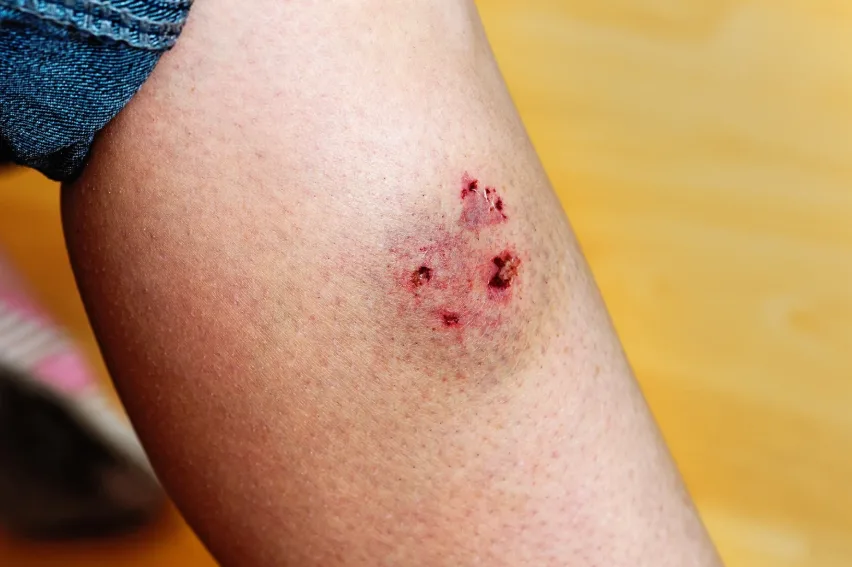
A dog bite is more disorienting than most people expect. The shock, the pain, and the awkwardness of the situation, especially when the dog belongs to a friend, neighbor, or family member, often push victims to downplay what just happened. That instinct can cost you significantly, both medically and legally.
Virginia handles dog bite cases differently than most states, and the steps you take in the first hours and days will shape your medical recovery and any future claim for compensation. This guide walks through what to do after a dog bite in Virginia, how state law applies, and what you should know before talking to an insurance adjuster.
Your First Priority After a Dog BiteGet Away and Get Medical Attention
Your immediate concerns are physical safety and infection control. Dog bites carry a high infection risk because canine mouths host bacteria like Pasteurella , Capnocytophaga , and Staphylococcus . Even a small puncture wound can become a serious infection within 24 to 48 hours.
- Move to safety. Get behind a fence, into a vehicle, or into a building. A dog that bit once may bite again, and adrenaline can mask the severity of your injuries.
- Wash the wound with soap and warm water for several minutes. This reduces the bacterial load even if the bleeding has not stopped.
- Apply pressure to control bleeding and cover the wound with a clean cloth or bandage.
- Seek medical care immediately. Even bites that look minor often need professional cleaning, antibiotics, a tetanus booster, and assessment for nerve or tendon damage.
- Call 911 if the bite is severe. Deep puncture wounds, facial injuries, uncontrolled bleeding, or bites to children warrant emergency response.
The medical record created at the ER or urgent care becomes the foundation of any later claim. The visit documents the time, mechanism, severity, and location of injuries, all of which insurers and defense attorneys will scrutinize. Skipping or delaying treatment is one of the most common reasons dog bite claims lose value.
Rabies is another concern. Healthcare providers in Virginia are required to report animal bites to the local health department, which triggers an investigation into the dog’s vaccination status and a quarantine period. If the dog cannot be located or proven vaccinated, you may need post-exposure rabies treatment.
Identify the Dog and Its Owner
If you are physically able, gather information at the scene before you leave. Even brief details collected in the first 30 minutes are dramatically more useful than anything reconstructed later.
- Owner’s full name, address, and phone number.
- Dog’s name, breed, age, color, and any distinguishing markings.
- Whether the dog is currently up to date on rabies vaccinations and the name of the veterinarian.
- Where the bite happened and whether the dog was on a leash, behind a fence, or running loose.
- Whether the dog has bitten anyone before. This question matters more than people realize and is discussed in detail below.
If the owner is uncooperative or absent, photograph the dog if you can do so safely, note the address where it is kept, and call animal control. A bite from an unknown stray complicates a claim significantly because there is no insured owner to pursue, but it does not necessarily end the case if the owner can later be identified.
Report the Bite to Local Authorities
Virginia law requires animal bites to be reported to the local health department. In most jurisdictions, the report goes to the city or county animal control office, which then coordinates with public health officials.
Reporting accomplishes two things. First, it triggers a quarantine and rabies observation period for the dog, which protects you and the public. Second, it creates an official record that becomes evidence in your claim. The animal control report typically documents the dog’s identity, the owner’s information, the dog’s vaccination history, and any prior complaints or bite history filed against that dog or that owner.
Get a copy of the report once it is finalized. If animal control cites the owner for a leash law violation, an aggressive dog designation, or a failure to vaccinate, those citations can become powerful evidence of negligence in your civil claim. Virginia jurisdictions including Fairfax, Alexandria, Arlington, and Prince William all have local ordinances governing dog control, and a documented violation can establish negligence per se.
Document Everything While Memories Are Fresh
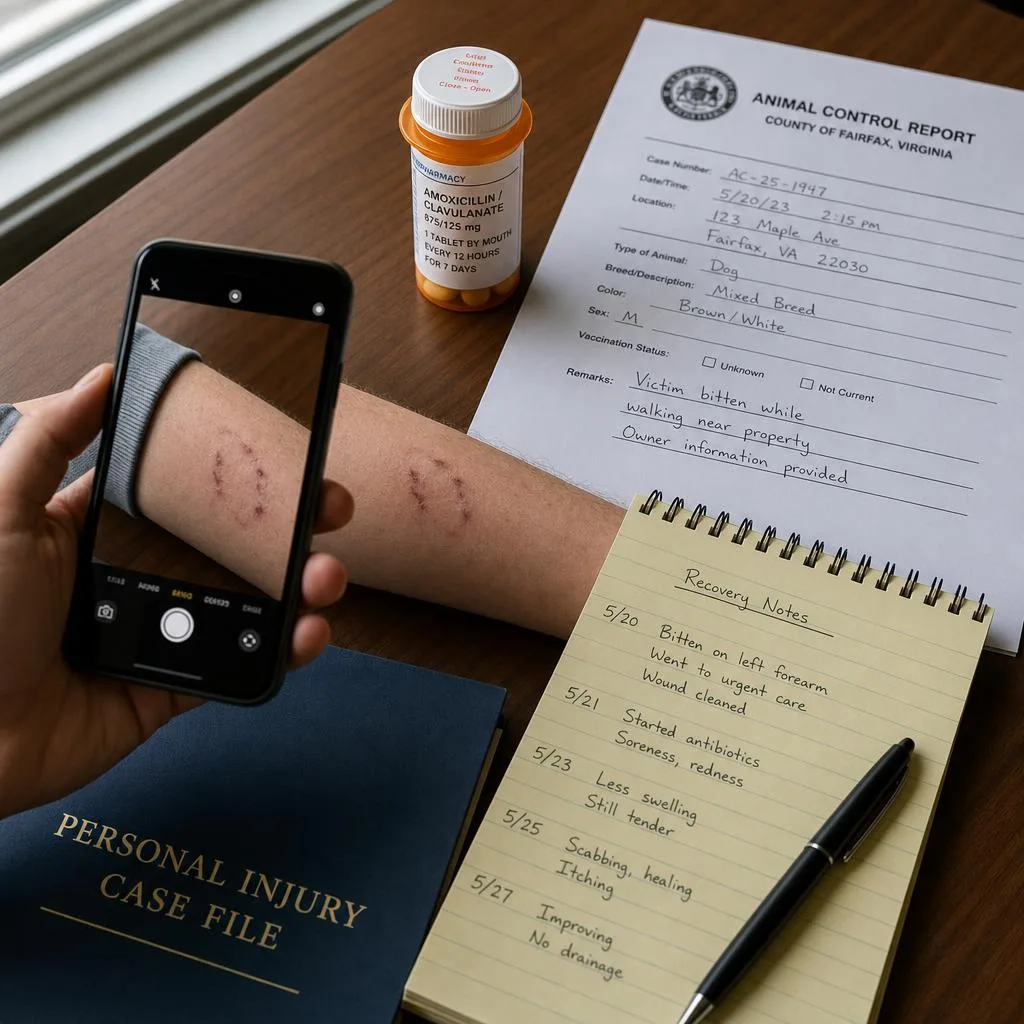
The strongest dog bite claims are built on documentation gathered in the first 72 hours. Insurers expect detailed records, and gaps invite skepticism.
- Photograph your injuries before and after medical treatment. Take new photos every few days as the wounds heal, scab, and scar.
- Photograph the scene including the location of the bite, any fence or enclosure failures, broken gates, “Beware of Dog” signs (or absence thereof), and the dog if you can do so safely.
- Save torn or bloodied clothing in a sealed bag.
- Get contact information from every witness , including bystanders, joggers, neighbors, or anyone else who saw what happened.
- Keep every receipt and bill related to medical care, prescriptions, transportation, and missed work.
- Start a recovery journal. Write down pain levels, sleep disruption, anxiety around dogs, missed activities, and how the bite affects your daily life.
These materials become the backbone of a damages claim and they are difficult or impossible to recreate later.
Understand Virginia’s One-Bite Rule and Negligence Standard
Virginia is one of the few states without a comprehensive dog bite statute imposing strict liability on owners. Most states impose liability automatically when a dog bites someone, regardless of the owner’s knowledge or precautions. Virginia does not. This is the single most important legal feature of any Virginia personal injury lawyer handling a dog bite case.
Instead, Virginia applies a modified version of the “one-bite rule” combined with traditional negligence principles. To win a Virginia dog bite claim, you generally must prove one of the following:
- Prior knowledge of dangerous tendencies. The owner knew or should have known the dog had aggressive or dangerous tendencies. A prior bite, a history of lunging, growling at strangers, or chasing people on the street can establish this knowledge.
- Negligence. The owner failed to use reasonable care in controlling the dog. Examples include leaving a gate unlatched, walking an unleashed dog in a leash-required area, or letting an unfamiliar visitor near a dog known to be reactive.
- Negligence per se. The owner violated a leash law, animal control ordinance, or dangerous-dog containment requirement, and that violation caused the bite.
The “one-bite” label is misleading. Virginia owners are not automatically given a free first bite. If a dog has previously growled, snapped, lunged at people, or otherwise shown aggression, the owner can be on notice even if the dog has never broken skin before. Equally, a leash law violation can establish liability on a first-time bite without any need to prove prior knowledge.
How Contributory Negligence Can End Your Claim
Virginia is also one of only a few states that follows the doctrine of pure contributory negligence in personal injury cases. Under this rule, if you are found even 1 percent at fault for the incident, you are barred from recovering any compensation at all.
Insurance defense attorneys know this and look aggressively for any reason to assign you partial blame. Common arguments include:
- Provocation. Teasing, hitting, pulling on, or otherwise startling the dog before the bite.
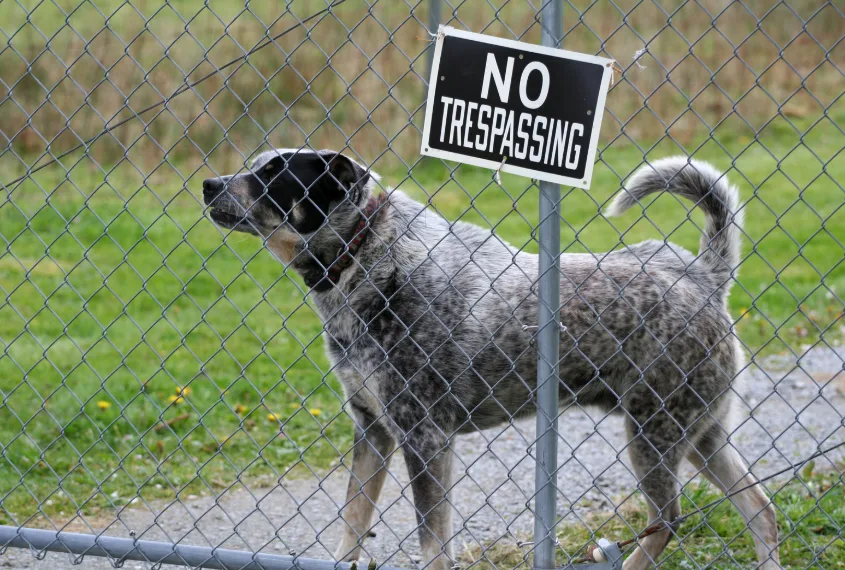
- Trespassing. Virginia generally does not allow trespassers to recover for injuries suffered while unlawfully on someone else’s property.
- Ignoring warnings. Approaching a dog after the owner warned you to stay back, or ignoring a “Beware of Dog” sign.
- Approaching an unfamiliar dog. Reaching into a vehicle, fenced yard, or otherwise initiating contact with a dog you do not know.
What Compensation Dog Bite Victims Can Pursue
A successful Virginia dog bite claim compensates victims for two broad categories of losses, and serious cases can also include punitive damages where the owner’s conduct was reckless or intentional.
Children bitten by dogs frequently develop lasting fear and anxiety responses, and Virginia law allows recovery for those psychological injuries even when the physical wounds heal cleanly. Facial scarring claims, especially in children and adolescents, can also produce significant non-economic damages because of the long-term cosmetic and emotional impact.
How Homeowners and Renters Insurance Covers Dog Bites
Most Virginia dog bite claims are paid not by the owner personally but by their homeowners or renters insurance policy. Standard policies typically include personal liability coverage that applies to dog bites, often with limits between $100,000 and $300,000, sometimes higher.
Two important caveats apply. First, some insurance carriers exclude coverage for specific breeds or for any dog with a prior bite history. If the dog is excluded under the owner’s policy, recovering compensation becomes significantly harder, although umbrella policies and personal assets may still be reachable. Second, the insurance adjuster’s job is to minimize the payout, and the adjuster will often contact you within days of the incident with a friendly tone, a request for a recorded statement, and possibly a quick lowball settlement offer.
A few things to remember when an adjuster calls:
- You are not required to give a recorded statement to the at-fault dog owner’s insurer.
- Do not sign a medical authorization without legal review. Broad authorizations give insurers access to years of unrelated medical history.
- Do not accept the first offer. Early offers rarely account for follow-up care, infection complications, or scarring revisions.
- Refer the adjuster to your attorney once you have one.
Virginia’s Statute of Limitations
Virginia gives dog bite victims two years from the date of the bite to file a personal injury lawsuit. If a loved one died from a dog attack, the family has two years from the date of death to file a wrongful death claim. Property damage claims, such as when one dog kills another dog, get a longer five-year window.
Two years sounds generous, but witnesses move, animal control records can be purged, the dog can be relocated, and physical evidence of containment failures can disappear. The earlier counsel begins building the case, the stronger the eventual claim. Reading what happens after hiring a lawyer gives a clearer picture of how the process unfolds.
Talk to a Virginia Dog Bite Lawyer Today!
Knowing what to do after a dog bite is the first step, but acting on it quickly is what protects your claim. If you or a family member was bitten by a dog in Virginia, the choices you make in the first weeks shape the entire case. The Alvarez Law Firm can request animal control records, preserve evidence, handle the insurance company, and pursue compensation for your medical bills, lost income, and pain and suffering. Call (703) 888-0959 or contact us online to schedule a consultation.
Frequently Asked Questions
What if the dog that bit me belongs to a friend or family member?
You are not “suing” them in the way most people imagine. The vast majority of Virginia dog bite claims are paid through the owner’s homeowners or renters insurance, not out of personal pocket. The owner pays premiums precisely so the insurer covers situations like this. Declining to file leaves you holding medical bills the policy was designed to cover.
Do I need to know whether the dog has bitten before?
Knowing helps, but it is not always required. Virginia liability can also rest on negligence (such as a leash law violation) or on observable warning signs short of a prior bite, including growling, lunging, or aggressive behavior the owner knew about.
What if the bite happened on the dog owner’s property?
You can still pursue a claim if you were lawfully on the property as a guest, invitee, or someone with permission to be there. Trespassers face a much harder path, since Virginia generally does not allow recovery for injuries suffered while unlawfully on someone else’s property.
What if I provoked the dog accidentally?
Even unintentional provocation, like stepping on a tail or startling a dog while reaching for something, can become a contributory negligence argument that ends a Virginia claim. The specific facts matter enormously. An experienced attorney can evaluate whether the owner’s negligence was the dominant cause despite any role you played.
How much is a Virginia dog bite case worth?
The honest answer is that case value depends on injury severity, scarring, future medical needs, lost income, psychological impact, available insurance coverage, and liability strength. National averages reported by the Insurance Information Institute show dog-related injury claims averaging roughly $58,000 in 2023, but Virginia cases vary widely from under $10,000 for minor bites to seven figures for catastrophic injuries or facial scarring in children.
How much does a dog bite lawyer cost?
Most Virginia dog bite attorneys, including The Alvarez Law Firm, work on a contingency-fee basis. You pay no attorney’s fees unless your case results in a recovery, and the fee is a percentage of that recovery. Initial consultations are typically free.
About The Alvarez Law Firm
The Alvarez Law Firm handles personal injury cases including dog bite claims for clients across Northern Virginia. With a focus on careful evidence preservation and aggressive negotiation against insurance carriers, our team helps injured Virginians navigate the state’s unusual dog bite framework and pursue the compensation they are owed.