

Most drivers ticketed for reckless driving in Virginia react the same way: they assume it’s a traffic ticket, they plan to mail in the fine, and they move on with their day. Then they read the summons more carefully and realize they have been charged with a Class 1 misdemeanor, the same classification as DUI, assault and battery, and petit larceny.
Reckless driving in Virginia is a criminal offense, not a traffic infraction. A conviction creates a permanent criminal record, exposes drivers to up to 12 months in jail, and can damage employment, security clearances, immigration status, and insurance rates for years. This guide explains exactly what counts as reckless driving under Virginia law, what the penalties are, and what to do if you’ve been charged.
Reckless Driving Is a Crime in Virginia, Not a Traffic Ticket
The single most important thing to understand about Virginia reckless driving is that it is a Class 1 misdemeanor under Virginia Code § 46.2-868. Unlike speeding tickets, running a red light, or failing to signal, a reckless driving conviction is not a traffic infraction; it is a crime.
The practical consequences of that distinction are significant:
- A criminal record. A reckless driving conviction goes on your permanent criminal record, not just your driving record. Virginia does not allow expungement of misdemeanor convictions in most cases.
- Jail exposure. Class 1 misdemeanors carry a maximum sentence of up to 12 months in jail.
- Higher fines. The maximum fine is $2,500, dramatically higher than typical speeding ticket amounts.
- License suspension. The court can suspend your driver’s license for up to six months.
- Court appearance required. Reckless driving is not on Virginia’s list of prepayable offenses. Mailing in payment without appearing in court is treated as a guilty plea to a criminal misdemeanor.
Drivers who don’t realize they’re facing criminal charges often make decisions in the first few days that cost them dearly later. Treating the summons like a routine speeding ticket is the most common one.
Reckless Driving by Speed: Va. Code § 46.2-862
The most common form of reckless driving in Virginia is reckless driving by speed under Va. Code § 46.2-862. The statute makes a driver guilty of reckless driving for either of two reasons:
- Driving 20 mph or more over the posted speed limit , regardless of what the limit is, or
- Driving over 85 mph , regardless of the posted limit.
The 85 mph trigger catches a lot of out-of-state drivers off guard. Several Virginia interstates now post 70 mph speed limits, which means driving 86 mph in a 70 zone, only 16 mph over the posted limit, is a criminal misdemeanor under Virginia law. Drivers who would receive a routine speeding ticket in their home state for the same conduct are charged with a crime here.
There is no first-offender leniency built into the statute. Virginia treats a first reckless driving by speed charge with the same maximum penalties as a second or third. The actual sentence varies by judge, jurisdiction, prior driving history, the speed involved, and whether the driver had defense counsel, but the statutory exposure is identical.
General Reckless Driving: Va. Code § 46.2-852
Va. Code § 46.2-852 is the catch-all reckless driving statute. It makes any person guilty of reckless driving who operates a vehicle “on any highway recklessly or at a speed or in a manner so as to endanger the life, limb, or property of any person,” regardless of the posted speed limit.
Virginia courts have defined “recklessly” as a disregard by the driver of the consequences of his act and an indifference to the safety of life, limb, or property. This is broader than the speed-based statute and gives officers significant discretion. Common scenarios charged under § 46.2-852 include:
- Single-vehicle accidents where the officer concludes the driver lost control through carelessness.
- Multi-vehicle collisions where the officer attributes the crash to the driver’s manner of operation.
- Driving conditions that are not severe enough for a per se speed violation but that the officer considers dangerous, such as weaving, abrupt lane changes, or aggressive following distance.
The fact that an accident occurred is not, by itself, enough to prove reckless driving. The Commonwealth still has to prove the driver’s conduct met the legal standard. Many § 46.2-852 charges arising from accidents are reducible or dismissible with the right defense.
The Other Forms of Reckless Driving
Beyond the speed and general statutes, Virginia recognizes more than a dozen specific reckless driving offenses, each codified separately:
- Passing when view is obstructed (§ 46.2-854).
- Driving a vehicle with overloaded passenger or cargo capacity (§ 46.2-855).
- Passing two vehicles abreast (§ 46.2-856).
- Driving two vehicles in one lane (§ 46.2-857).
- Passing at an intersection or railroad grade crossing (§ 46.2-858).
- Passing a stopped school bus (§ 46.2-859), one of the most common reckless driving charges in Northern Virginia.
- Failing to give proper signals (§ 46.2-860).
- Driving too fast for traffic conditions (§ 46.2-861), even when below the posted limit.
- Failure to maintain proper control of a vehicle (§ 46.2-853), often charged after single-vehicle accidents.
- Failure to yield the right of way (§ 46.2-863).
- Racing or exhibition driving (§§ 46.2-864 and 46.2-865), with felony enhancements when injury or death results.
All of these carry the same Class 1 misdemeanor classification as reckless driving by speed, even when the conduct involved would seem far less serious than driving 90 mph.
Penalties for a Reckless Driving Conviction
The maximum penalties for a Virginia reckless driving conviction are set by statute. The actual sentence depends on the judge, the jurisdiction, the speed involved, the driver’s record, and the strength of the defense presented.
For driving over 100 mph, Virginia law beginning July 1, 2026 requires installation of an Intelligent Speed Assistance device on all vehicles operated by the convicted driver, or a license suspension of two to six months, in addition to other penalties.
Long-Term Consequences Beyond the Courtroom
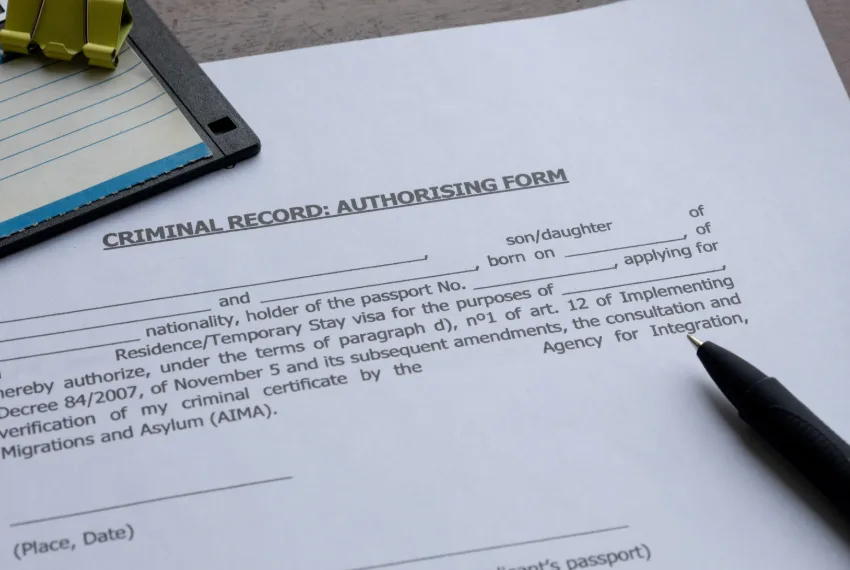
The fines, jail exposure, and license suspension are only part of the picture. The downstream consequences of a reckless driving conviction often outweigh the immediate penalties:
- Permanent criminal record. Virginia does not allow expungement of misdemeanor convictions in most cases. The conviction follows the driver for life and shows up on background checks indefinitely. Reading impact of a criminal record gives a fuller picture of how this plays out.
- Employment consequences. Many employers ask about misdemeanor convictions on job applications, and some industries automatically disqualify applicants with reckless driving convictions, particularly transportation, government contracting, and any role requiring driving.
- Security clearances. A single reckless driving conviction is unlikely to cost a clearance by itself, but multiple convictions can be treated as a judgment problem. Federal employees and contractors in the D.C. region are particularly affected.
- Commercial driver’s license (CDL) consequences. A reckless driving conviction can result in CDL disqualification of 60 days for a first offense and longer for subsequent offenses, even if the driver was in their personal vehicle when ticketed.
- Insurance rate hikes. Auto insurance carriers treat reckless driving as a serious violation. Premium increases of 50 to 100 percent are common, lasting three to five years.
- Immigration consequences. For visa holders, lawful permanent residents, and naturalization applicants, a reckless driving conviction can complicate immigration status and trigger additional scrutiny.
What “Improper Driving” Means and Why It Matters
Va. Code § 46.2-869 creates a separate offense called improper driving. The statute allows a court, or the Commonwealth’s Attorney before trial, to find a driver charged with reckless driving guilty instead of improper driving when “the degree of culpability is slight.”
Improper driving is a traffic infraction, not a crime. The maximum fine is $500. There is no jail exposure, no criminal record, and the driver typically receives 3 DMV demerit points instead of 6.
The reduction from reckless driving to improper driving is one of the most common favorable outcomes in Virginia reckless driving cases, especially for first-time drivers with clean records, lower-speed violations, and well-prepared defense presentations. It is not automatic; it requires either prosecutor agreement or a judicial finding after evidence is presented.
Special Considerations for Out-of-State Drivers
Out-of-state drivers caught for reckless driving in Virginia face several added complications. Virginia does not let drivers prepay reckless driving charges, so a court appearance is required. Failing to appear can result in a bench warrant and, depending on the home state’s reciprocity arrangements, license suspension at home.
Most states report reckless driving convictions back to the driver’s home state DMV through the Driver License Compact and Non-Resident Violator Compact. The home state then applies its own consequences, which often include points, surcharges, and insurance increases. A few states do not impose additional points for out-of-state convictions, but the criminal record itself remains and follows the driver everywhere.
The good news is that out-of-state drivers do not have to physically appear at every court date. With Virginia counsel, most preliminary appearances and many trials can be handled in the driver’s absence. Working with a Virginia traffic ticket lawyer who regularly handles reckless driving cases in the relevant jurisdiction is usually the most efficient way to resolve these charges from out of state.
What to Do If You’re Charged with Reckless Driving in Virginia
The decisions you make in the first days after receiving the summons matter:
- Do not prepay the charge. Even if the court paperwork suggests prepayment is an option, doing so on a reckless driving charge is treated as a guilty plea to a Class 1 misdemeanor. Always confirm with counsel before sending any payment.
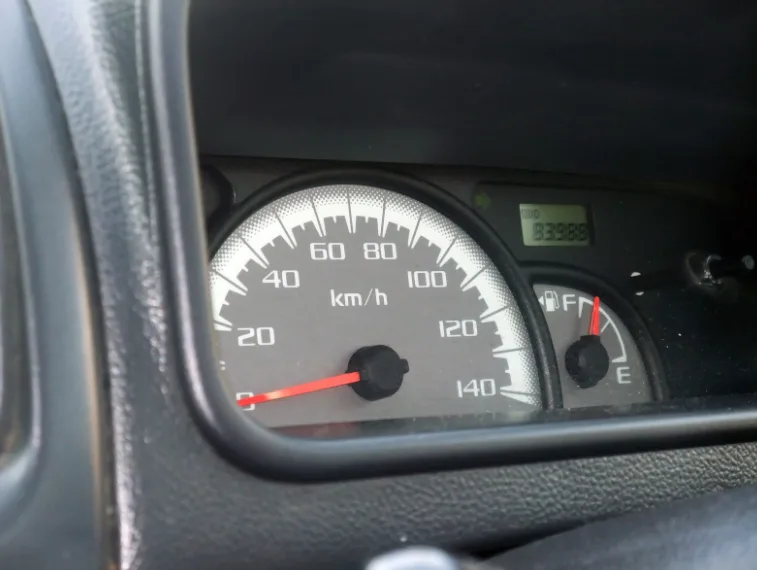
- Get your speedometer calibrated. Independent speedometer calibration is one of the most useful pieces of evidence in a reckless driving by speed case. A small calibration error can sometimes drop the recorded speed below the reckless driving threshold.
- Pull together driving records and documentation. A clean prior driving record, completion of a driver improvement course, and proof of safe driving habits help support reduction or sentence mitigation requests.
- Avoid discussing the charge with anyone but your attorney. Statements made to friends, family, social media, or even insurance representatives can sometimes be used in court.
- Hire experienced counsel quickly. Reckless driving cases benefit from early preparation. A criminal defense attorney who handles Virginia reckless driving regularly will know which arguments work in which courts and which prosecutors are open to reductions.
Talk to a Virginia Reckless Driving Lawyer Today!
A Virginia reckless driving conviction follows you for life. The Alvarez Law Firm can review the police report, gather speedometer calibration and other defense evidence, negotiate with prosecutors for reduction or dismissal, and represent you in court so you do not have to navigate the process alone. Call (703) 888-0959 or contact us online to schedule a consultation.
Frequently Asked Questions
Will I really go to jail for reckless driving in Virginia?
For most first-time reckless driving by speed cases under 90 mph with a clean driving record, jail is uncommon. Speeds above 90 mph and especially above 100 mph dramatically increase the risk, as do prior reckless driving convictions, accident-related charges, and reckless driving combined with DUI charges or other offenses.
Can a reckless driving conviction be expunged from my record?
In most cases, no. Virginia does not allow expungement of misdemeanor convictions in most circumstances. Expungement is generally available only when charges are dismissed, nolle prossed, or result in acquittal. This is one of the strongest reasons to fight a reckless driving charge before conviction rather than after.
Do I have to go to court if I live out of state?
In most cases, no, if you have hired Virginia counsel. Your attorney can typically appear on your behalf for arraignment and many trial dates. Some serious cases, particularly those involving very high speeds or accidents, may require your appearance.
Will my insurance company find out about a reckless driving conviction?
Yes. Insurance companies routinely pull driving records before policy renewals, and most states report reckless driving convictions through interstate compacts. Premium increases of 50 to 100 percent are common, typically lasting three to five years.
What if I’m under 18 and charged with reckless driving?
Drivers under 18 charged with reckless driving in Virginia are typically handled in the Juvenile and Domestic Relations District Court rather than General District Court, with different procedures and sentencing options. A juvenile defense attorney can explain the process and help protect both the immediate outcome and the juvenile’s future record.
Can a reckless driving charge be reduced to a regular speeding ticket?
Yes, in many cases. Reductions to improper driving (a traffic infraction with no criminal record) are common in lower-speed cases with clean records and good preparation. Reductions to a simple speeding ticket are also possible, particularly when speedometer calibration evidence brings the recorded speed below the reckless threshold.
About The Alvarez Law Firm
The Alvarez Law Firm handles traffic and criminal defense matters for clients across Northern Virginia, including reckless driving cases in Alexandria, Fairfax, Arlington, and surrounding jurisdictions. With deep familiarity with the local courts and prosecutors that handle these cases daily, our team helps drivers protect their records, their licenses, and their freedom.