

The U.S. green card application process is one of the most consequential legal procedures any foreign national will navigate. A green card grants lawful permanent residence, the right to live and work indefinitely in the United States, and a direct path toward eventual citizenship. It also involves multiple federal agencies, dozens of forms, strict eligibility rules, and timelines that can stretch from months to decades depending on the category and country of origin.
This guide walks through the major pathways to a green card, the step-by-step application process, realistic timelines, and the most common reasons applications get denied.
What a Green Card Actually Is
A green card, formally called a Permanent Resident Card, is the document that proves you are a lawful permanent resident of the United States. As a green card holder, you can live anywhere in the country, work for almost any employer, attend public schools and universities, own property, and travel internationally with the ability to return.
A green card is not the same as U.S. citizenship. Permanent residents cannot vote in federal elections, hold most federal jobs, or carry a U.S. passport. They can also lose their status through prolonged absence from the United States, certain criminal convictions, or fraud in obtaining the card. Most green card holders become eligible to apply for naturalization and U.S. citizenship after five years of permanent residence (three years if married to a U.S. citizen).
A green card also differs from a visa. A visa is permission to enter the United States for a specific temporary purpose, such as study (F-1), work (H-1B), or tourism (B-2). A green card is permission to stay permanently. Many people transition from a temporary visa to a green card, but the legal frameworks are entirely separate.
The Five Main Pathways to a Green Card
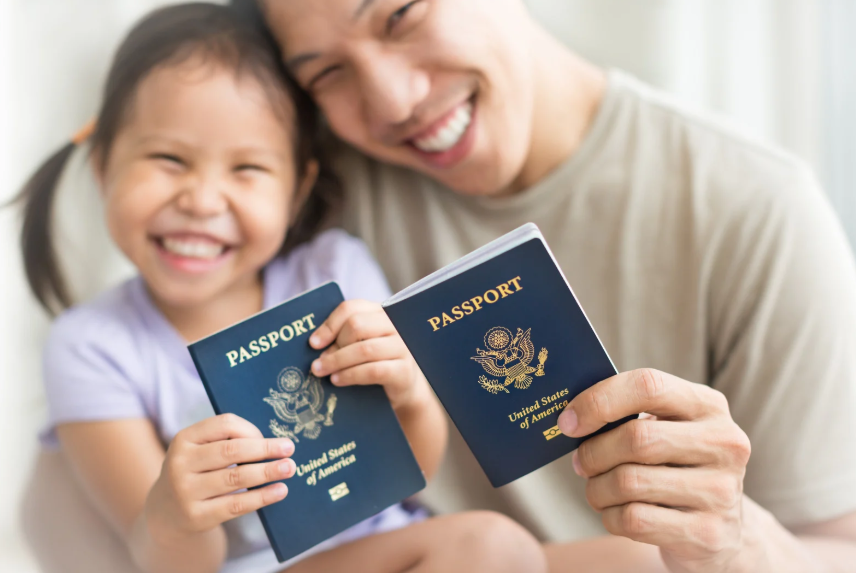
U.S. immigration law recognizes several routes to lawful permanent residence. Most applicants qualify under one of the following five categories:
- Family-based. Sponsored by a U.S. citizen or lawful permanent resident relative.
- Employment-based. Sponsored by a U.S. employer or self-petitioning under specific extraordinary-ability or investor categories.
- Refugee or asylee. Granted to individuals who received refugee or asylum status and have lived in the U.S. for at least one year in that status.
- Diversity Visa Lottery. An annual program awarding up to 50,000 green cards to nationals of countries with historically low rates of immigration to the U.S.
- Special immigrant categories. Includes religious workers, certain juveniles, Afghan and Iraqi nationals who supported U.S. operations, and several other narrowly defined groups.
Each pathway has its own eligibility rules, forms, and processing timelines. The two most common routes, family-based and employment-based, account for the overwhelming majority of green cards issued each year.
Family-Based Green Cards
Family-based immigration is the largest single source of new green cards. The system divides family applicants into two groups, and the difference between them is enormous.
Immediate Relatives of U.S. citizens are not subject to annual numerical caps. This category includes spouses of U.S. citizens, unmarried children under 21 of U.S. citizens, and parents of U.S. citizens (when the citizen is at least 21). Because there is no cap and no waiting list, immediate relatives can typically move from petition to green card in 12 to 18 months.
Family Preference categories cover more distant relationships and are subject to strict annual caps. There are four preference categories:
- F1: Unmarried adult sons and daughters (21 or older) of U.S. citizens.
- F2A: Spouses and unmarried children under 21 of lawful permanent residents.
- F2B: Unmarried adult sons and daughters of lawful permanent residents.
- F3: Married sons and daughters of U.S. citizens.
- F4: Brothers and sisters of adult U.S. citizens.
Because demand in these categories far exceeds the annual visa supply, applicants wait for a “priority date” to become current before they can move forward. Wait times vary dramatically by category and country of birth, ranging from a few years to more than two decades for some applicants from countries with high demand.
Employment-Based Green Cards
Employment-based immigration is divided into five preference categories, commonly known as EB-1 through EB-5:
- EB-1. Persons of extraordinary ability in the sciences, arts, education, business, or athletics; outstanding professors and researchers; and certain multinational executives and managers.
- EB-2. Professionals holding advanced degrees and persons of exceptional ability. Includes the National Interest Waiver (NIW) for those whose work serves the U.S. national interest.
- EB-3. Skilled workers, professionals with bachelor’s degrees, and certain other workers.
- EB-4. Special immigrants including religious workers, certain juveniles, and several smaller subcategories.
- EB-5. Investors who invest a qualifying amount of capital (currently $800,000 or $1,050,000 depending on the location and type of project) in a U.S. business that creates at least 10 full-time jobs for U.S. workers.
Most employment-based applications begin with the U.S. employer, who typically must complete a labor certification (PERM) showing that no qualified U.S. worker is available for the position before filing Form I-140. The major exceptions are EB-1, EB-2 NIW, and EB-5, which allow self-petitioning without an employer sponsor.
The Two Filing Routes: Adjustment of Status vs. Consular Processing
Once an immigrant petition is approved and a visa is available, the applicant must complete the green card itself through one of two routes. The choice depends primarily on whether the applicant is inside or outside the United States.
| Factor | Adjustment of Status | Consular Processing |
|---|---|---|
| Where you apply | Inside the United States | Outside the United States |
| Form used | Form I-485 | Form DS-260 |
| Processing agency | USCIS | U.S. Department of State (consulate or embassy abroad) |
| Interview location | USCIS field office in the U.S. | U.S. embassy or consulate abroad |
| Work and travel during processing | Eligible to apply for EAD (Form I-765) and Advance Parole (Form I-131) | Generally not available |
| Typical timeline (after petition approval) | 8 to 14 months | 6 to 12 months |
Adjustment of status is generally preferred when the applicant is already in the U.S. on a valid visa, because they can continue to live and (with EAD) work in the U.S. while the application is pending. Consular processing is required when the applicant is abroad or when adjustment is not legally available.
The Step-by-Step Application Process
Although the specifics vary by category, most green card applications follow the same general sequence:
- Step 1: File the immigrant petition. A U.S. citizen or permanent resident relative files Form I-130 for family-based cases, or a U.S. employer files Form I-140 (often after PERM labor certification) for employment-based cases. Self-petitioners in EB-1, EB-2 NIW, and EB-5 file their own I-140s.
- Step 2: Wait for the priority date to become current. For categories subject to annual caps, applicants wait until their priority date appears as “current” on the monthly Visa Bulletin published by the U.S. Department of State.
- Step 3: File the green card application. Once the priority date is current, the applicant files Form I-485 (if inside the U.S.) or Form DS-260 (if abroad), along with supporting documents, biometrics fees, and the medical examination report.
- Step 4: Attend the biometrics appointment. USCIS collects fingerprints, photographs, and a signature for background check purposes.
- Step 5: Attend the interview. Most applicants are interviewed by a USCIS officer or a consular officer who reviews the application, asks questions about eligibility, and assesses credibility. For marriage-based cases, both spouses typically attend.
- Step 6: Receive a decision. Approved applicants receive their green card in the mail within a few weeks. Denials trigger appeal rights or the option to refile, depending on the reason.
The process can be paused, delayed, or derailed at any step by missing documents, RFEs (Requests for Evidence), background check holds, or changes in personal circumstances. Working with an experienced green card lawyer can help anticipate these issues before they cause problems.
Realistic Processing Timelines
Processing times depend heavily on category, country of birth, and the current USCIS workload. Rough estimates as of 2026 include:
- Immediate relatives of U.S. citizens (spouse, parent, child under 21): 12 to 18 months from petition filing to green card.
- Family preference categories: Several years to several decades, depending on category and country. F4 (siblings of U.S. citizens) for applicants born in Mexico or the Philippines can exceed 20 years.
- Employment-based EB-1, EB-2, EB-3: 1 to 3 years for applicants born in most countries; significantly longer for India and China due to per-country caps that can stretch waits into the 5-to-15-year range or longer.
- Adjustment of status (Form I-485): Typically 8 to 14 months from filing once the priority date is current.
- Consular processing: Generally 6 to 12 months from National Visa Center receipt to interview, plus additional time depending on the post.
Country of birth, not citizenship, controls per-country backlogs. Children born in India to parents who were born in another country can sometimes “cross-charge” to the parent’s country and avoid the Indian backlog.
The Visa Bulletin and Priority Dates
The Visa Bulletin is the monthly U.S. Department of State publication that controls when capped categories can move forward. It contains two charts: the Final Action Dates chart, which controls when a green card can actually be approved, and the Dates for Filing chart, which sometimes allows earlier I-485 filing.
A priority date is the date USCIS receives the immigrant petition (Form I-130 or I-140), and it acts as the applicant’s place in line. When the Visa Bulletin shows a date later than your priority date for your category and country, your case is “current” and you can move to the next step. Watching the Visa Bulletin carefully each month is essential for anyone in a backlogged category.
Common Reasons Green Card Applications Get Denied
USCIS denies green card applications for a relatively predictable set of reasons. Understanding them helps applicants avoid the most common pitfalls:
- Inadmissibility grounds. Certain criminal convictions, prior immigration violations, fraud, certain communicable diseases, and security concerns can render an applicant inadmissible.
- Public charge concerns. Applicants must show they will not become primarily dependent on the U.S. government for subsistence. Family-based cases require a sponsor’s Form I-864 Affidavit of Support.
- Insufficient evidence of the qualifying relationship. In marriage-based cases, USCIS scrutinizes the bona fides of the marriage closely. Insufficient documentation of a real, ongoing relationship is a common denial reason.
- Failure to maintain lawful status. Adjustment of status applicants generally must have maintained lawful status in the U.S., with limited exceptions for immediate relatives.
- Missed deadlines and unanswered RFEs. Failing to respond to a Request for Evidence within the deadline (typically 87 days) results in denial.
- Misrepresentation on prior applications. Inconsistencies between current and past immigration filings can trigger denial and findings of fraud that bar future applications.
Working and Traveling While Your Application Is Pending
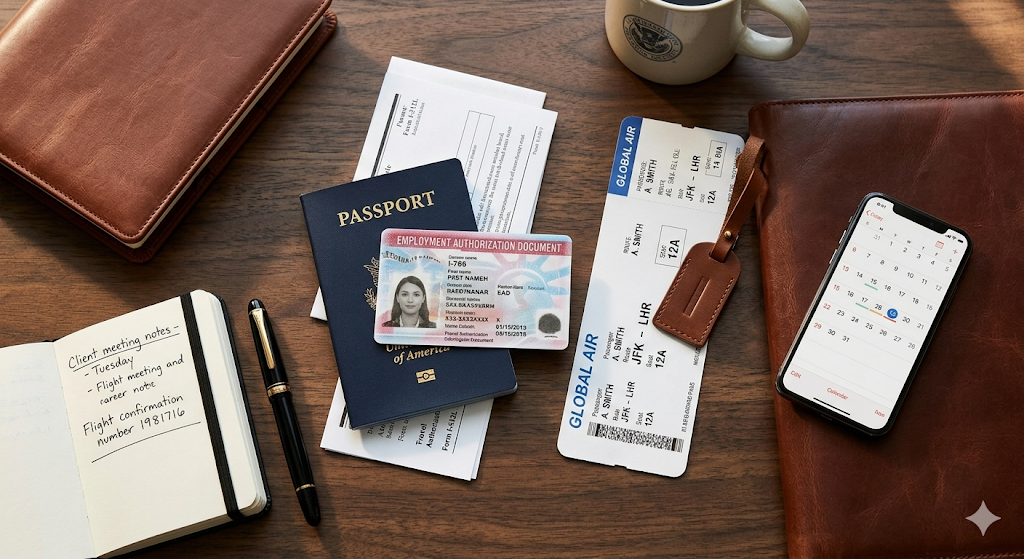
Most applicants who file Form I-485 also file two additional forms:
- Form I-765, Application for Employment Authorization. Once approved, the EAD allows the applicant to work for any U.S. employer while the I-485 is pending. EADs are typically issued within several months of filing.
- Form I-131, Application for Advance Parole. Required for international travel while the I-485 is pending. Leaving the U.S. without Advance Parole generally results in the I-485 being deemed abandoned.
Both forms are filed at no additional cost when filed concurrently with Form I-485. Working with an experienced immigration lawyer ensures the timing of travel, employment, and any change in circumstances does not jeopardize the underlying application.
Talk to a Green Card Attorney Today!
The U.S. green card application process leaves little room for error. A missed deadline, an unanswered RFE, or a poorly documented petition can delay your case by months or end it entirely. The Alvarez Law Firm can evaluate your eligibility, identify the right category, prepare the petition and supporting documents, and represent you through interviews and any complications that arise. Call (703) 888-0959 or contact us online to schedule a consultation.
Frequently Asked Questions
How long does it take to get a green card?
It depends on the category and country of birth. Immediate relatives of U.S. citizens typically receive a green card in 12 to 18 months. Employment-based applicants from most countries wait 1 to 3 years. Family preference and certain employment-based applicants from India, China, Mexico, and the Philippines can wait many years to decades because of per-country caps.
How much does the green card application cost?
Government filing fees for a typical adjustment-of-status case run several thousand dollars when combining the I-130 or I-140, the I-485, the I-765, and the I-131. Medical exam costs vary by physician. Attorney fees are separate and depend on the complexity of the case. USCIS publishes the current fee schedule on its website.
Can I apply for a green card on my own?
Legally, yes. Many simple cases, particularly immediate-relative marriage cases with clean immigration histories, are handled without an attorney. The risk of self-filing rises sharply with any prior immigration violation, criminal history, complex family situation, or employment-based filing involving PERM or self-petitioning categories.
What happens if my green card application is denied?
The next step depends on why it was denied and what category it was filed under. Some denials can be appealed to the Administrative Appeals Office (AAO), some can be reopened with new evidence, and some require refiling from the beginning. Certain denials trigger removal proceedings, which is why responding correctly to any denial notice immediately is critical.
Can I lose my green card?
Yes. Green card status can be lost through prolonged absence from the United States (generally more than 6 to 12 months without a re-entry permit), abandonment, certain criminal convictions, fraud in obtaining the card, or formal removal proceedings. Permanent residents who plan to be abroad for extended periods should obtain a re-entry permit before leaving.
When can I apply for U.S. citizenship after getting a green card?
Most permanent residents become eligible for naturalization after five years of continuous residence and physical presence in the United States. Permanent residents married to and living with a U.S. citizen can apply after three years.
About The Alvarez Law Firm
The Alvarez Law Firm handles immigration matters for clients across Northern Virginia and the broader Washington, D.C. region. With practice areas spanning family-based green cards, employment-based petitions, naturalization, and removal defense, our team helps individuals and families navigate the complex U.S. immigration system from petition through final approval.